Queer Places:
The Garden of Remembrance, Theosophical Society Campus, Adyar, Chennai, Tamil Nadu 600020, India
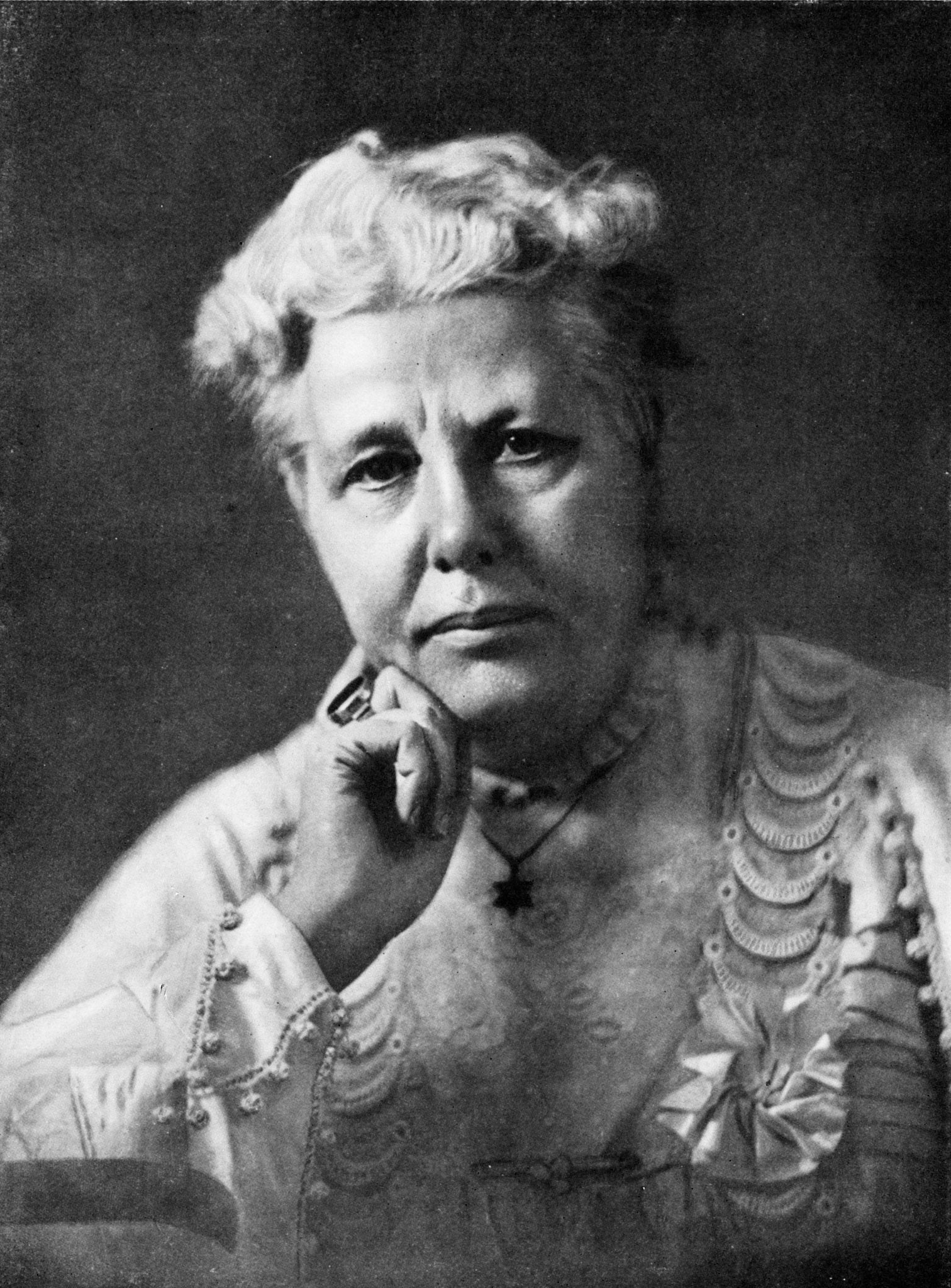 Annie Besant (October 1, 1847 – September 20, 1933) was one of the most prominent, versatile, and radical reformers of the late 19th and early 20th centuries. Her life
spanned multiple arenas of revolution—from British secularism and birth control advocacy to the spiritual realms of Theosophy and the frontlines of the Indian anti-colonial
struggle.
Annie Besant (October 1, 1847 – September 20, 1933) was one of the most prominent, versatile, and radical reformers of the late 19th and early 20th centuries. Her life
spanned multiple arenas of revolution—from British secularism and birth control advocacy to the spiritual realms of Theosophy and the frontlines of the Indian anti-colonial
struggle.
The biographical trajectory of Annie Besant, her historic presidency of the Indian National Congress, and her fascinating connections to early LGBTQ+ history and queer
theory reveal a woman who defied the boundaries of Victorian womanhood.
Annie Wood was born in London to a middle-class family of Irish heritage. Her early life was marked by a deeply emotional, religious temperament. At age 20, she married
an Anglican clergyman, Frank Besant, but the marriage was a disaster. Annie's growing doubts about Christian dogma, combined with her independent spirit, led to a legal
separation in 1873.
Following her divorce, her intellectual and political life exploded:
She joined the National Secular Society alongside Charles Bradlaugh. In 1877, they published a pamphlet on birth control
(The Fruits of Philosophy), leading to a highly publicized trial for obscenity. Though vindicated, the scandal cost her custody of her daughter.
She joined the Fabian Society and championed labor rights. She notably organized the 1888 London Matchgirls' Strike, rallying underpaid, toxic-chemical-exposed young
women to win better working conditions.
In 1889, Besant read Helena Blavatsky's The Secret Doctrine and underwent a profound conversion to Theosophy—a spiritual movement aiming to reconcile science, religion,
and philosophy while promoting universal brotherhood.
Besant became Blavatsky's closest disciple, eventually succeeding her as a key leader of the Theosophical Society. Under Besant's leadership, the Society's headquarters
moved to Adyar, Madras (Chennai), India.
Alice Bailey was a fellow writer and Esotericist who initially joined Besant's Theosophical Society. However, doctrinal differences and disputes over the "Masters of
Wisdom" eventually led Bailey to split from Besant's circle and establish her own Arcane School, showcasing the highly influential, female-led network of global
esotericism.
In India, Besant found her ultimate political calling. She believed that India's spiritual heritage was vital to the world and vehemently opposed British colonial
rule.
In 1916, she launched the All India Home Rule League, demanding self-government for India within the British Empire.
Her powerful rhetoric led the British government to intern her in 1917. This backfired spectacularly, causing widespread protests across India.
In tribute to her courage and leadership, she was elected President of the Indian National Congress in 1917—the first woman to ever hold the post.
Besant’s life and writings are highly significant to queer history and feminist theory, particularly in how late-Victorian women conceptualized desire, passion, and
gender roles.
Besant wrote in her autobiography about the "idolatry" she felt for her mother, generalizing:
"All girls have in them the germ of passion. . . . I had but two ideals in my childhood and youth, round whom twined these budding tendrils of passion: they were my
mother and the Christ."
Queer and feminist historians point to Besant and her contemporaries to argue that homoeroticism and intense romantic bonds between women in the 19th century were not
uniform indicators of modern "sexual orientation."
Consider how this intense mother-daughter and female-to-female adoration manifested in the lives of her peers:
Annie Besant: A "sexual radical" who advocated for contraceptive rights and challenged traditional marriage, but found her deepest passions in maternal devotion,
spiritual unions, and political crusades.
Edith Simcox: A writer and social reformer who lived a life of intense, unrequited romantic devotion to the novelist
George Eliot (Mary Ann Evans).
Frances Power Cobbe: A prominent suffragist who lived in a devoted, recognized domestic partnership (what some call a
"Boston marriage") with sculptor Mary Lloyd for over thirty years.
Ethel Smyth: An English composer and suffragette who was openly passionate in her letters, having numerous romantic affairs with
women (including Virginia Woolf) and occasionally men.
Augusta Becher: Had an identical emotional blueprint of maternal "idolatry" in youth, but followed a traditional heterosexual
path, marrying a man.
Besant's legacy as a sexual radical directly paved the way for Emma Goldman, the legendary anarchist and early advocate for gay
and lesbian rights. Goldman frequently praised early free-love and birth-control pioneers like Besant. Both women understood that true liberation for women—and indeed,
anyone defying normative sexual boundaries—required breaking down the state-sanctioned, patriarchal control over human bodies and relationships.
Through her defiance of marriage, her leadership of female-centric spiritual movements, and her intense emotional frameworks, Annie Besant remains a crucial figure in
tracing how modern ideas of feminism, gender non-conformity, and queer identity evolved.
Besant died on September 20, 1933, in Chennai, India, and she was cremated, her ashes scattered part on the river Ganges and the rest were placed in a garden of remeberance at Adyar.
References:
Other references:
- https://en.wikipedia.org/wiki/Annie_Besant
- https://www.britannica.com/biography/Annie-Besant
- https://incarnateword.in/documents/calcutta-dictionary-of-national-biography-a-v/14-besant-annie-1847-1933
Support this project
This website is a passion project researched, developed, and funded entirely by me. If you find the content valuable and would like to help support the ongoing research and hosting costs, any contribution is deeply appreciated.
Thank you for keeping this independent resource alive!
My books on Amazon: Elisa Rolle's books
BACK TO HOME PAGE

